
Water damage restoration starts with stopping further damage as quickly as possible. Our certified team removes standing water, locates hidden moisture, dries the structure completely, cleans affected areas, and then repairs what was damaged, from drywall and flooring to trim and paint.
Ashburn is a mix of established communities like Ashburn Village and Ashburn Farm and newer neighborhoods such as Brambleton and One Loudoun. Older homes tend to have aging plumbing, while newer ones often see appliance failures, second-floor leaks, and finished-basement flooding. Whatever the source, Summit handles the emergency mitigation and the rebuild under one roof, so you never have to coordinate multiple contractors.
Emergency response
Ashburn’s neighborhoods were built in different eras, and construction style affects how water travels and how a home should be dried.
Homes built in the 1990s and early 2000s may have aging supply lines, original water heaters, and appliance hookups that are reaching the end of their service life.
Finished lower levels are common across Ashburn, and a slow leak behind a basement wall can soak drywall, carpet, insulation, and wiring before anyone notices.
Modern construction typically uses PEX plumbing and open floor plans, but a second-floor plumbing failure can quickly impact multiple levels of the home.
Shared walls and multi-story plumbing allow water to travel between floors and neighboring units if the leak is not addressed quickly.
Larger custom homes often have multiple HVAC systems, bathrooms, and water heaters, which increases the number of potential leak sources.
Ground moisture, plumbing leaks, and poor drainage can create hidden moisture problems beneath the home long before they are visible inside.
Some of the worst water damage sits behind drywall, under floors, or above ceilings. If you spot any of these in your Ashburn home, get it checked before the moisture spreads.
A damp, earthy smell that lingers after you air out the room usually means moisture is trapped where you can’t see it.
Tea-colored rings on a ceiling or wall mean water has soaked through at some point, and it may still be leaking.
Bubbling, blistering, or flaking paint is often moisture pushing out from behind the wall.
Cupped hardwood, swollen laminate edges, or tiles that pop loose can signal water trapped underneath.
A bill that climbs with no change in how you use water can point to a slow, concealed leak.
Hissing or dripping inside a wall while every fixture is off often means a pressurized line is leaking.
Dark spots on drywall, baseboards, or ceilings mean moisture has been present for a while and needs a professional look.
Not sure? We scan the area with moisture meters and a thermal camera and tell you plainly whether there is a problem.
Ashburn gets four full seasons, and each one stresses a home’s plumbing, roof, or foundation in its own way. Winter freezes, wet springs, summer thunderstorms, and the occasional tropical remnant all send Loudoun County homeowners our way.
Hard freezes put supply lines in attics, garages, and exterior walls at risk
Thunderstorms, gusty winds, and the occasional tropical remnant
Falling leaves clog gutters and downspouts, preventing proper drainage during autumn storms. Water can back up under roofing or collect around the foundation, causing leaks that often go unnoticed until winter.
Frozen pipes and aging plumbing remain one of the leading causes of emergency water damage.
Tank leaks and ruptures can release a significant amount of water into utility rooms and finished basements.
Braided supply lines on washers, dishwashers, and refrigerator ice makers wear out and let go, often while no one is home.
A failed sump pump, a settled grade, or a clogged downspout can let a heavy storm push water into a lower level.
Damaged shingles, flashing failures, and clogged gutters allow water into attics and wall cavities.
A backed-up sewer line brings contaminated water into the home and calls for protective gear and full sanitizing.
We follow a proven, step-by-step process that covers everything from the emergency call to the final repair, so nothing gets missed and nothing gets handed off to a different crew.
When water enters your home, immediate action can significantly reduce the damage. Our team is available 24/7 to answer your call, give you immediate guidance, and dispatch certified technicians with the equipment to begin mitigation right away.
Typically takes
15 – 30 minutes
Water rarely stays where it lands; it wicks into walls, subfloors, and the ceilings below. Our technicians use moisture meters and thermal imaging to find hidden water inside walls, ceilings, flooring, and structural materials, determine the water category, and build a restoration plan for your property.
Typically takes
45 – 90 minutes
Once the inspection is complete, we begin extracting standing water with commercial-grade pumps and extractors. Fast removal protects flooring, drywall, cabinetry, and framing while reducing the chance of mold growth.
Typically takes
1 – 4 hours
After standing water is removed, drying equipment is placed to pull moisture out of building materials. We check moisture readings every day and reposition equipment until every material reads dry.
Typically takes
3 – 5 days
Water damage often leaves behind bacteria, debris, and odors. We clean salvageable materials, sanitize affected surfaces, apply antimicrobial treatment where needed, and deodorize the property before repairs begin.
Typically takes
1 – 2 days (scope dependent)
Unlike mitigation-only companies, Summit completes the entire restoration. From drywall and flooring to trim, paint, and cabinetry, our team repairs your home, matches existing finishes, and coordinates with your insurance carrier along the way.
Typically takes
Days to weeks
Every water damage project is different. The total cost depends on the source of the water, how long it has been present, how much of the home is affected, and whether structural repairs are needed once the property is dry. Most homeowners’ insurance policies cover sudden and accidental water damage, so many customers are responsible only for their deductible.
Minor Water Damage
A small leak caught early with clean water and little to no demolition required.
Moderate Restoration
Water in one or more rooms that needs extraction, drying, and partial drywall or flooring replacement.
Major Water Damage
Extensive flooding, multiple affected levels, or contaminated water requiring demolition, sanitization, and reconstruction.
If the damage was caused by a burst pipe, failed water heater, appliance leak, or covered storm event, restoration is often covered by your homeowners insurance. Coverage depends on your policy and the cause of the loss, but in many cases homeowners pay only their deductible.
Summit Restoration works directly with insurance carriers throughout the process. We document the damage, prepare a detailed estimate, and communicate with your adjuster to help keep the claim moving.
★★★★★
“Summit Construction & Restoration did an excellent job helping us after a basement leak caused water damage. They responded quickly, explained everything clearly, and handled the water mitigation and drying process professionally from start to finish.”
★★★★★
“I had a bathroom leak on the upper level that caused water to come through the ceiling downstairs, and I was really worried about moisture and possible mold. Nathan Cook from Summit Construction & Restoration came out and did a thorough job.”
★★★★★
“Summit Restoration was fantastic! They responded very quickly to our water damage and did an outstanding job with the mitigation and cleanup. They were professional, thorough, and extremely helpful throughout the process. They also did a great job coordinating with our insurance adjuster, making a stressful situation much easier.”
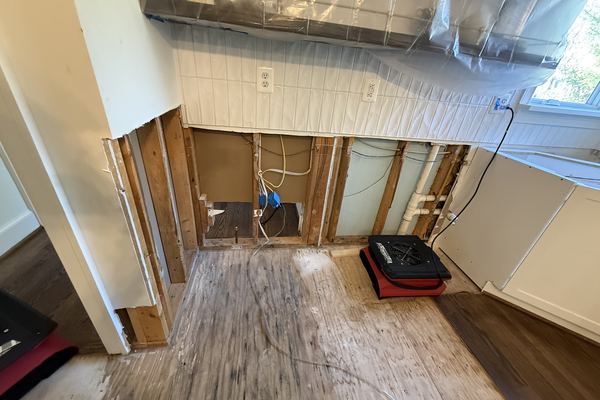
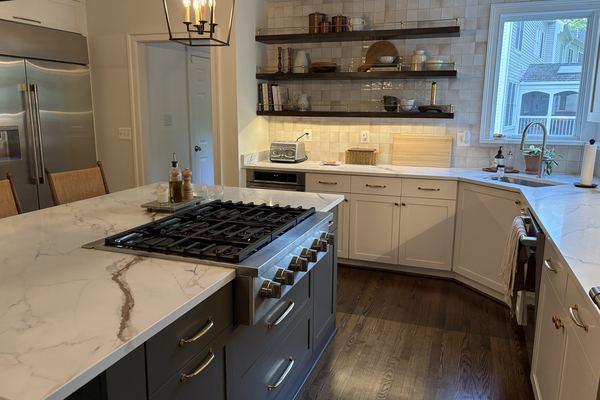
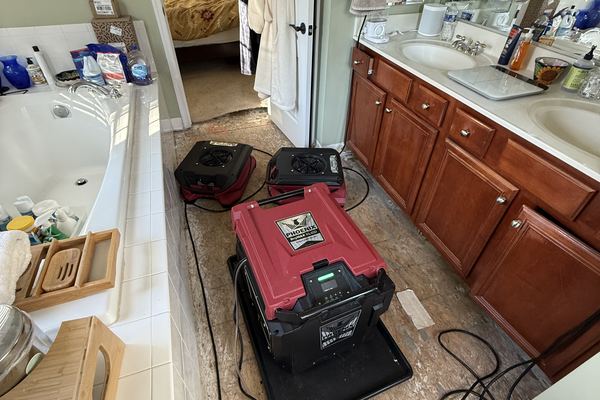
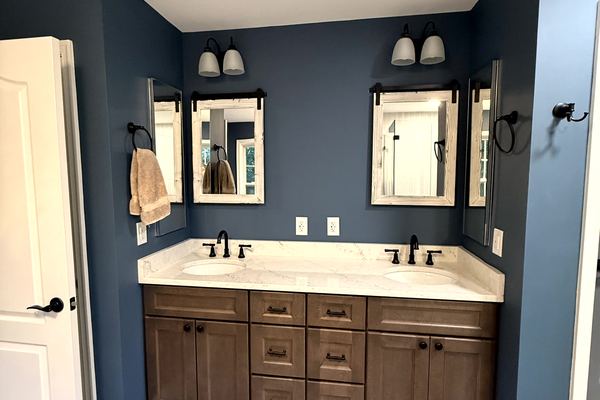
AFTER — restored
VS
Supply line failed overnight, saturating cabinetry and subfloor. Extracted, dried, and rebuilt to match existing finishes.
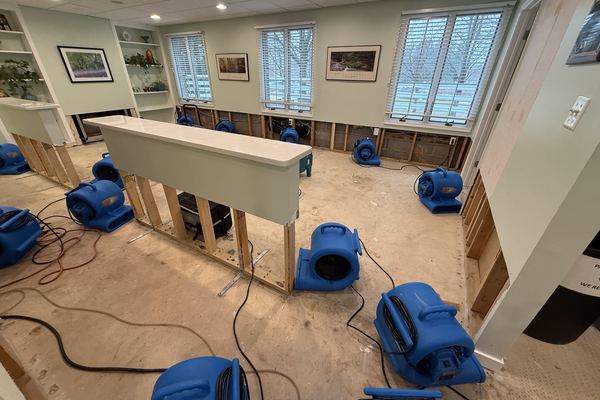
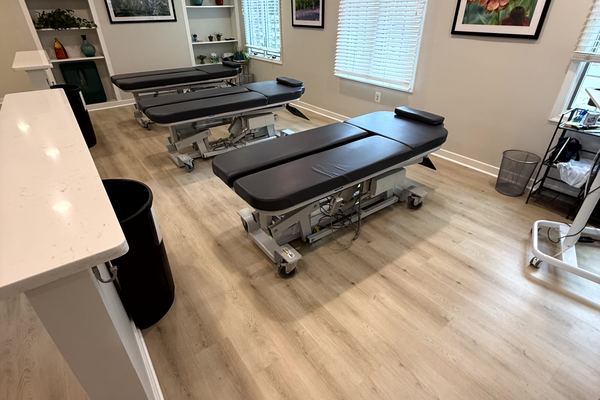
AFTER — dried & restored
VS
A storm pushed water into the lower level. We brought full extraction, structural drying, and antimicrobial treatment.
AFTER — removal
VS
Washing machine overflow soaked through to the floor below. Contained the ceiling, dried the cavity, and repainted.
Have questions about water damage restoration in Ashburn? Don’t see yours? Call any time, day or night.
Need immediate assistance? Call now for round-the-clock emergency help, or request a free estimate online.
We offer 24/7 emergency water damage restoration throughout Ashburn and the surrounding Loudoun County communities. Response times vary with your location and the weather, but our goal is to arrive as quickly as possible to begin water extraction and limit further damage.
Most residential drying projects take 3–5 days, depending on how much water is involved, the affected materials, and indoor humidity. If drywall, flooring, or framing must be rebuilt, the full restoration takes additional time. We give you a clear timeline after the inspection.
Often, yes, when the loss is sudden and accidental, such as a burst pipe, a failed water heater, or an appliance leak. Gradual leaks and flood-type events can be treated differently, so we document everything and work with your adjuster from the start.
As fast as you can. Water wicks into drywall, insulation, and flooring within minutes, and mold can begin to grow in 24–48 hours. Calling the same day gives you the best chance of saving materials.
Yes. We use moisture meters and thermal cameras to trace moisture through walls, ceilings, and floors, so nothing stays wet behind a finished surface.
No. If drying starts quickly, hardwood, cabinets, framing, and many belongings can be saved. During the inspection we tell you what can be dried in place and what has to be replaced.
Yes. Summit is a Virginia Class A licensed contractor, so the same team handles drywall, flooring, trim, paint, and structural repairs, and matches existing finishes as closely as possible.
A water loss rarely comes alone. Whether you’re dealing with fire, mold, storm damage, or the repairs that follow, Summit Restoration provides complete restoration services throughout Ashburn and Loudoun County, from emergency mitigation to the final rebuild.
Practical advice from our restoration team on what to do, what to expect, and how to protect your home.
Not sure which one you need? Here is how to tell, and what each service includes.
What to do in the first hour to protect your home and your health.
What happens in the first hour after an emergency, and how to vet a company before you need one.