
Flood cleanup starts with safety and speed. Our team removes standing water and debris, cleans and sanitizes everything the water touched, dries the structure completely, and then restores what was damaged. Because floodwater is typically contaminated, it is treated differently from a clean-water leak, and porous materials such as carpet, pad, and insulation often have to be removed.
In Ashburn, flooding most often shows up as water in finished basements and lower levels after heavy rain, runoff near creeks and drainage corridors, or a failed sump pump. Summit handles the cleanup and the rebuild under one roof, so you are not coordinating a mitigation company and a separate contractor.
Emergency response
Where a home sits, how it was built, and how water drains around it all affect how floodwater enters and how cleanup should be done.
A lower level with finished drywall, carpet, and electrical can take on significant damage from even a few inches of water, and contaminated floodwater means porous materials usually have to be removed.
Walkout basements and window wells can let heavy rain in, especially when grading or drainage has settled over time.
Properties close to Goose Creek and local drainage corridors can see water intrusion when heavy rain overwhelms the natural runoff paths.
Ground-floor units and shared-wall construction mean floodwater can affect neighboring spaces, and cleanup often needs to be coordinated with the HOA or building.
A sump pump that fails during a storm, or loses power, is one of the most common reasons a dry basement floods.
Standing water in a crawlspace is easy to miss and can lead to mold, insulation damage, and structural moisture problems.
Flood damage is not always as obvious as standing water. These signs mean it’s time to call a professional before the damage spreads.
Any water pooling in a basement, garage, or lower level needs professional removal, and floodwater should be treated as contaminated.
Persistent damp smells often indicate moisture trapped in walls, carpet, or flooring after water has receded.
A visible tide line on drywall or concrete shows how high water reached and how far it has wicked into the walls.
Hardwood, laminate, and subflooring swell when they absorb floodwater, even after the surface looks dry.
Drywall absorbs water quickly and can crumble, stain, or sag as it stays wet.
Flickering lights, tripped breakers, or wet outlets after a flood are a safety hazard. Stay away until it’s assessed.
Mold can appear within 24–48 hours after flooding and means moisture is still present.
Using moisture meters and thermal imaging, we can identify hidden flood damage before it becomes a larger problem.
Northern Virginia’s climate brings heavy rain in every season, and Loudoun County’s fast-growing neighborhoods rely on drainage systems, stormwater ponds, and sump pumps that can be overwhelmed during intense storms.
Snowmelt and frozen ground limit drainage and send water toward foundations
Intense downpours can overwhelm storm drains and local creeks quickly
Remnants of tropical systems can bring several inches of rain in a day. Leaves clogging gutters and drains make it worse by keeping water from moving away from the home.
Intense storms can overwhelm drainage and push water toward foundations and into lower levels.
Pumps that fail, clog, or lose power during a storm let groundwater fill the basement.
Soil that slopes toward the home, or clogged downspouts and gutters, direct water to the foundation.
Water finds its way through cracks, floor joints, and window wells under hydrostatic pressure.
Fast-moving rain can cause water to rise quickly near creeks and low-lying areas.
Overwhelmed municipal lines can push contaminated water into floor drains and lower levels.
We follow a detailed process to safely clean and restore properties affected by flooding, from the first call to the final walkthrough.
If your property is flooding, call right away. Our team is available 24/7 to answer, give you immediate safety guidance, and dispatch technicians with pumps and extraction equipment.
Typically takes
15 – 30 minutes
Before work begins we check for electrical and structural hazards, identify the type of water involved, and use moisture meters and thermal imaging to find how far the water has traveled.
Typically takes
45 – 90 minutes
We remove standing water with commercial-grade pumps and extractors, then clear mud, debris, and materials that can’t be saved, such as saturated carpet, pad, and insulation.
Typically takes
2 – 8 hours
Specialized drying equipment pulls moisture out of walls, subfloors, and framing. We monitor moisture levels daily and adjust equipment until the structure reaches acceptable levels.
Typically takes
3 – 7 days
Floodwater often leaves bacteria, silt, and odors. We clean and sanitize affected surfaces, apply antimicrobial treatments where needed, and deodorize the property so it is safe before repairs begin.
Typically takes
1 – 2 days (scope dependent)
Summit completes the entire restoration. From drywall, insulation, and flooring to trim, paint, and cabinetry, our team rebuilds what the flood damaged and matches existing finishes.
Typically takes
Days to weeks
Flood cleanup costs depend on how much water entered, how long it sat, whether it was contaminated, and how much of the structure needs to be removed and rebuilt. Because every flood is different, we provide a free on-site inspection and a detailed written scope before restoration begins.
Minor Flooding
A small amount of water on a hard surface or lower level, caught quickly, with little material removal.
Moderate Flood Damage
Water in one or more rooms with extraction, debris removal, drying, sanitizing, and limited material replacement.
Major Flood Damage
Multiple rooms or levels affected, contaminated floodwater, and demolition and reconstruction required.
Insurance coverage for flooding depends on the policy and the source of the water. Water from a burst pipe or a covered storm event is often covered by homeowners insurance, while rising surface water may require a separate flood policy. We’ll help you understand what’s likely covered and document everything the adjuster needs.
Summit Restoration works directly with insurance carriers. We photograph and document the damage, prepare a detailed estimate, and communicate with your adjuster to help keep the claim moving.
★★★★★
“My house severely flooded and caused extensive damage. Summit was recommended to me by the water mitigation team and I am so appreciative. Ryan facilitated communication among many parties and always made sure I was kept up to date throughout the process.”
★★★★★
“After we discovered our basement window leak that flooded our unfinished floor area, Summit Restoration came early the next morning and got right to work on cleanup and dehumidifying the affected area. They were worth every penny and I highly recommend their services!”
★★★★★
“Summit Restoration was fantastic! They responded very quickly to our water damage and did an outstanding job with the mitigation and cleanup. They were professional, thorough, and extremely helpful throughout the process. They also did a great job coordinating with our insurance adjuster, making a stressful situation much easier.”
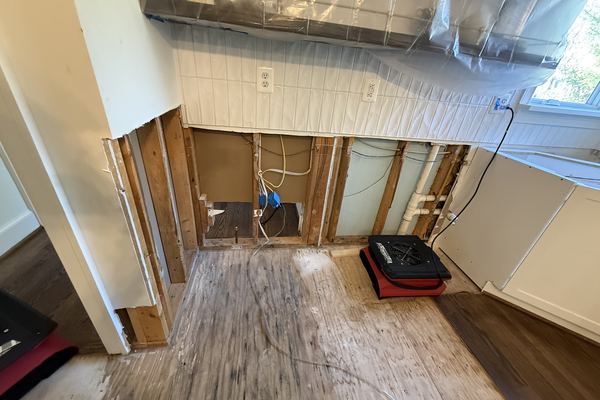

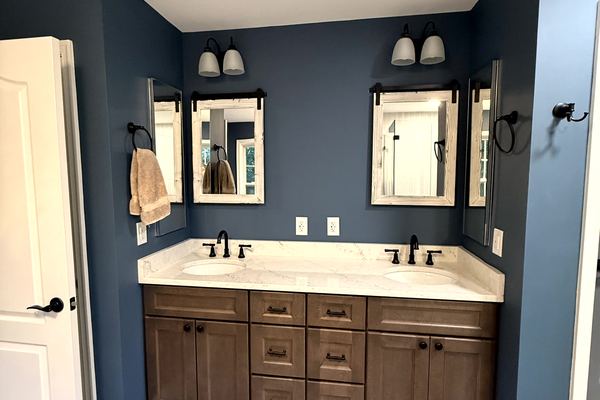
AFTER — restored
VS
Supply line failed overnight, saturating cabinetry and subfloor. Extracted, dried, and rebuilt to match existing finishes.
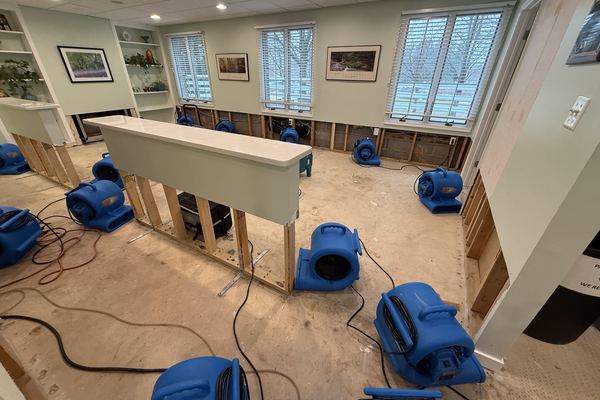
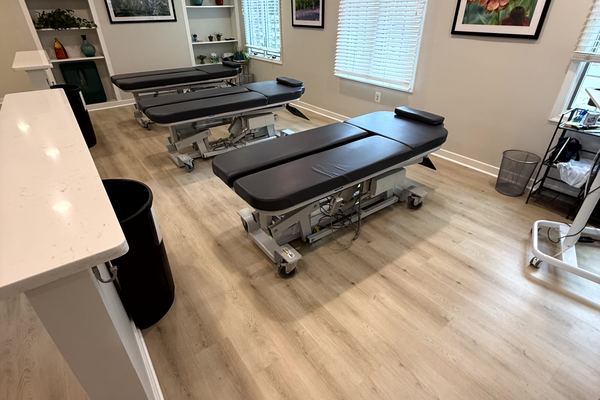
AFTER — dried & restored
VS
A storm pushed water into the lower level. We brought full extraction, structural drying, and antimicrobial treatment.
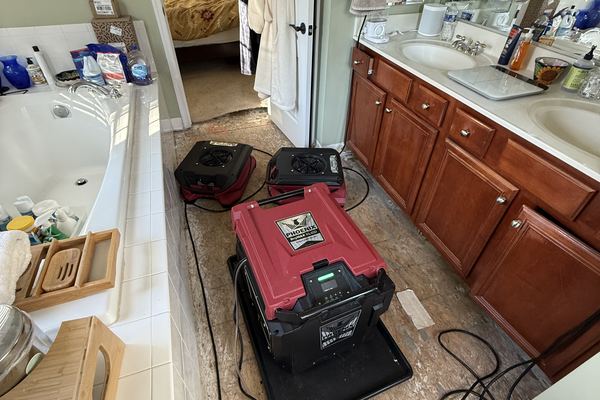
AFTER — removal
VS
Washing machine overflow soaked through to the floor below. Contained the ceiling, dried the cavity, and repainted.
Have questions about flood damage cleanup in Ashburn? Don’t see yours? Call any time, day or night.
Need immediate assistance? Call now for round-the-clock emergency help, or request a free estimate online.
We offer 24/7 emergency flood cleanup throughout Ashburn and the surrounding Loudoun County communities. Our goal is to arrive as quickly as possible to begin water extraction and limit further damage.
Yes. Floodwater often contains contaminants and debris, which means more extensive cleaning, sanitizing, and removal of porous materials than a clean-water leak.
Standing floodwater can hide electrical hazards and contamination. It’s best to stay out of standing water and wait for professionals to assess the situation.
Water removal usually takes a few hours, and structural drying commonly takes 3–7 days depending on how much water entered and what materials were affected. Repairs add time on top of that, and we give you a clear timeline after the inspection.
It depends on the policy and the source of the water. Water from a burst pipe or covered storm event is often covered, while rising surface water may require a separate flood policy. We document everything and work directly with your insurance provider.
Yes. If it isn’t handled properly, floodwater can weaken structures and lead to mold growth. Thorough cleanup and complete drying are essential.
Yes. Summit is a Virginia Class A licensed contractor, so the same team handles cleanup, drying, and the full rebuild.
Flooding often leads to other problems, such as mold, contaminated water, and structural repairs. Summit Restoration provides complete restoration services throughout Ashburn and Loudoun County, from emergency cleanup to the final rebuild.
Practical advice from our restoration team on what to do, what to expect, and how to protect your home.
What to do in the first hour to protect your home and your health.
Not sure which one you need? Here is how to tell, and what each service includes.
See how storm risk compares by county and what it means for homeowners.